What an Eleven-Point Electrical Safety Inspection Checks
This is included on every service call we run. Here's what's actually being checked, item by item, and why each one matters here specifically.
September 3, 2026 · 4 min read
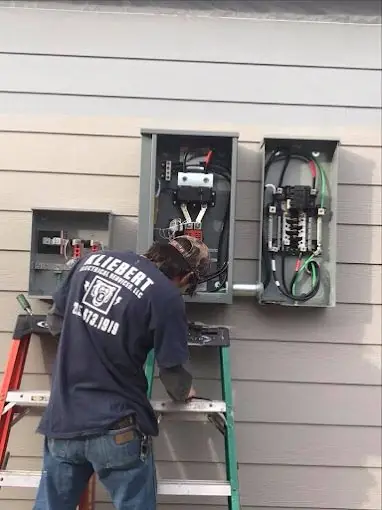
We include a safety inspection with every service call, residential or commercial, regardless of what brought us out to the property. It's easy for that to sound like a marketing line, so it's worth actually explaining what's being checked and why, because most of it addresses problems that are common specifically in this part of Louisiana, not generic electrical hazards you'd find anywhere.
The panel itself, not just the breaker you called about
A service call usually starts with one symptom: a breaker that keeps tripping, an outlet that's dead, a light that flickers. Before touching that specific issue, we look at the panel as a whole. Are the breakers matched to the panel's rating, or has something been swapped in over the years that doesn't belong. Is there any sign of scorching or heat discoloration around specific breakers, which usually means a connection has been loose and arcing under load. Is the panel overcrowded with double-tapped breakers, where two circuits share a slot rated for one, which is a common shortcut in older additions and a real fire risk.
Grounding, and why the water table here makes it different
A proper ground connection is what gives a fault current somewhere safe to go instead of through a person or an appliance. South Louisiana's high water table changes how grounding rods perform over time compared to drier soil, and ground connections that were adequate when a house was built can degrade as soil conditions shift. We check the ground rod connection, the bonding at the panel, and whether GFCI protection is present and functioning in wet locations, bathrooms, kitchens, exterior outlets, and garages, where code requires it and where a missing or failed GFCI is genuinely dangerous rather than a technicality.
Exterior disconnects and corrosion
Humidity is a constant here, and exterior electrical equipment, AC disconnects, meter bases, exterior panels, takes that exposure directly for years at a time. We check exterior disconnect housings for corrosion, water intrusion, and connection integrity, because a corroded connection outside doesn't announce itself the way a tripped breaker does. It just slowly degrades until it fails, often during exactly the kind of heavy rain or storm when you need that equipment working.
Wiring type and age
Homes built in this area in the 1960s and 70s sometimes still have aluminum branch wiring, which was standard practice at the time and isn't automatically a hazard, but it does need connectors and inspection specific to aluminum, since it expands and contracts differently under load than copper and loose aluminum connections carry a documented fire risk. We check wiring type where it's visible at outlets, switches, and the panel, and flag any connections that show the discoloration or looseness that's the early warning sign for that specific failure mode.
Smoke and carbon monoxide detection
We check that smoke detectors are present, powered, and correctly placed, and carbon monoxide detection specifically where there's a fuel-burning appliance or an attached garage. This is a fast check, but it's the kind of thing that gets overlooked for years in a home where nothing has obviously gone wrong, and it's the cheapest possible insurance against the thing actually going wrong.
Surge protection at the whole-home level
Louisiana's storm patterns mean voltage surges from lightning and grid switching are a real and recurring risk, not a rare event. We check whether whole-home surge protection is installed at the panel, which protects everything downstream, rather than relying on individual plug-in surge strips that only protect what's plugged directly into them and do nothing for hardwired equipment like an AC unit or a water heater.
Outlets, switches, and the connections behind them
We test outlets for correct polarity and grounding, not just whether they power a device when you plug something in. An outlet can pass the simple test, something plugged in turns on, and still be wired backwards or missing a proper ground, which won't show up until it actually matters. We also check switch boxes and junction boxes for loose connections, overfilled boxes, and any wire nuts that have worked loose over time, since a splice that was tight when it was made doesn't necessarily stay tight for decades of heat cycling and humidity.
Why we run this on every call, not as an add-on
The point of running this inspection on every visit, not just as a paid add-on someone has to request, is that most of these issues don't announce themselves. Nobody calls us because their ground connection has degraded or a wire nut has loosened behind a switch plate. They call because an outlet stopped working, and the inspection is how we find the other issue while we're already there, instead of it becoming its own emergency call six months later. It's also why we treat every call the same way, whether it's a single dead outlet or a full commercial renovation. The inspection doesn't change based on how big the job looks on the surface.
Kliebert Electrical Services · (225) 673-1919
Call (225) 673-1919More articles
What to Expect During Generator Installation
The real sequence of a whole-house generator install, step by step, and why gas availability and permitting shape the schedule here more than the equipment does.
How to Choose an Electrician in Ascension Parish
Fewer bullet points, more of what actually distinguishes one electrician from another when you're standing in your kitchen trying to decide who to call.